
Career· 7 min read
How to Become a Sterile Processing Technician in 2026: 6 Steps
What sterile processing technicians do, what you need to get hired, and the 6 steps from training and 400 hands-on hours to CRCST certification.
By CRCST Prep Editorial Team
Key takeaways
- Sterile processing technicians clean, inspect, package, sterilize and deliver the reusable instruments used in surgery and patient care.
- Most people start with a high school diploma or GED, learn the basics through a course or on the job, log 400 hours of hands-on work and earn a certification such as the CRCST.
- A course is optional for the CRCST; the 400 hands-on hours are not. You can take the exam first and finish the hours within 6 months.
- Many employers ask for certification, and New York requires it by law: new hires have 18 months to earn it.
To become a sterile processing technician, you typically need a high school diploma or GED, training in sterile processing (a course or on-the-job), and a certification such as HSPA’s CRCST, which takes a passing exam score and 400 hours of hands-on experience in a sterile processing department. Many people get hired as trainees, log their hours on the job and certify within months.
The steps are below, followed by what the work involves, what employers ask for and how long it takes. Requirements for the CRCST come from HSPA’s Certification Handbook (revised January 2026), as of November 2026.
What is a sterile processing technician?
A sterile processing technician (also called a sterile processing tech, central service technician or SPD tech) makes reusable medical instruments safe to use again. They receive used instruments from the operating room and clinics, clean and decontaminate them, inspect and test them, assemble and package them into sets, sterilize them, and store and deliver them for the next case. The U.S. Bureau of Labor Statistics groups the job under “medical equipment preparers.”
How to become a sterile processing technician in 6 steps
1. Finish high school or a GED
Most employers and training programs ask for a high school diploma or equivalent. You don’t need a college degree to start.
2. Learn the basics, through a course or on the job
A sterile processing course teaches the vocabulary, infection prevention, instrument names, decontamination, packaging and sterilization before you set foot in a department. Courses are common at community colleges and online.
They are not required for the CRCST. HSPA’s handbook says you can apply for the exam based on your experience without taking a preparatory course or buying study materials. Many techs learn on the job instead, starting with HSPA’s reference text, the Sterile Processing Technical Manual, and the instruments in front of them.
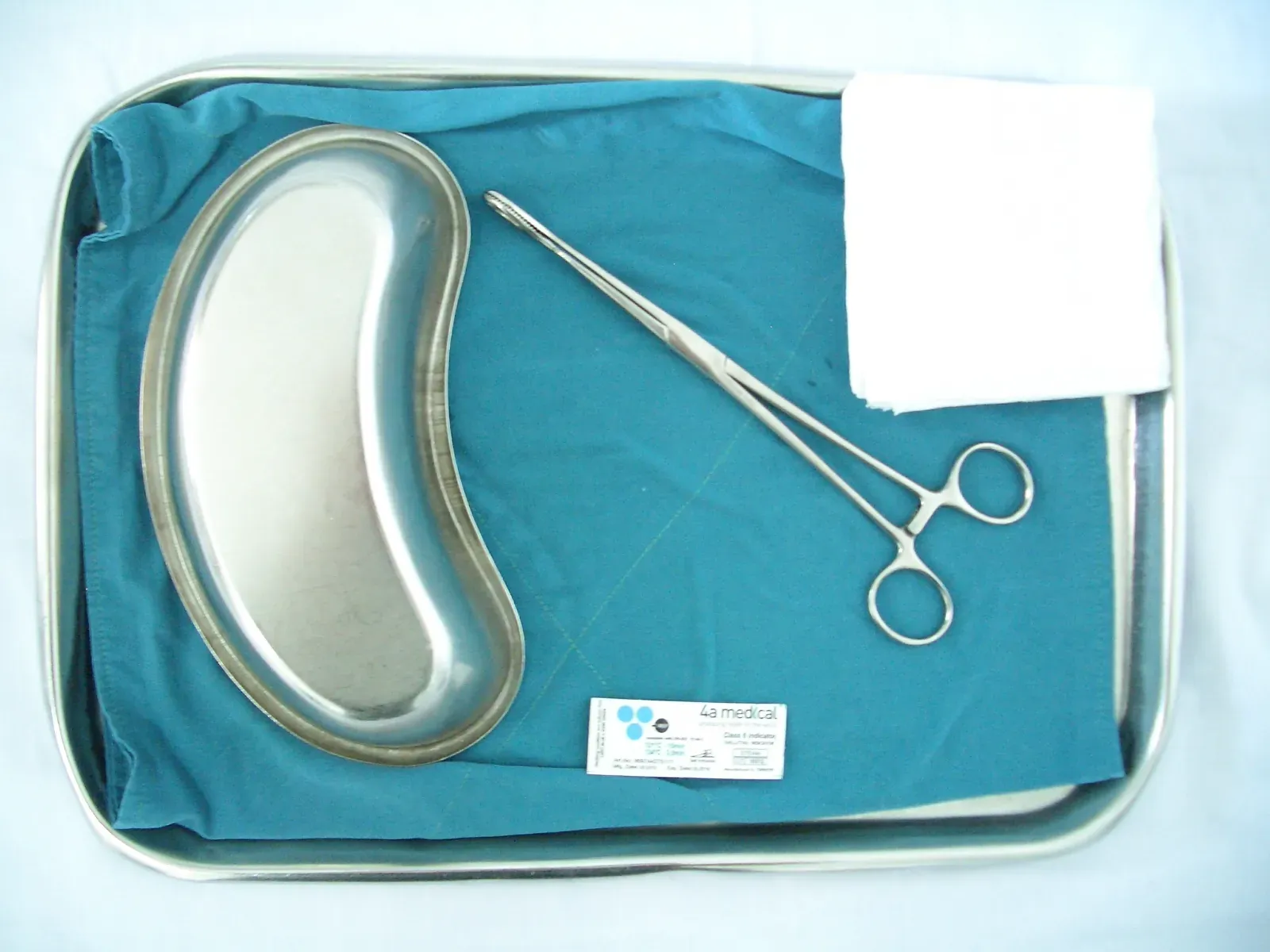 Photo: آرمین, via Wikimedia Commons (CC0).

3. Get hired as a trainee, or volunteer, to start your hours
The CRCST requires real work in a sterile processing department, and HSPA does not place candidates, so you need to find a department yourself. The usual routes:
- Entry-level or trainee jobs in a hospital’s sterile processing department (SPD) or central service, where you are paid while you learn.
- Volunteer hours, which HSPA accepts on the same terms as paid hours.
- A course with a clinical component, if the program arranges a placement.
Hours in a hospital or surgery center count. Hours in a dental, optical or veterinary clinic count only if HSPA approves that facility first.
4. Log 400 hands-on hours
HSPA requires 400 hours across five areas, signed off by a supervisor who watched your work:
| Area | Hours |
|---|---|
| Decontamination | 120 |
| Preparing and packaging instruments | 120 |
| Sterilization and disinfection | 120 |
| Storage and distribution | 24 |
| Quality assurance processes | 16 |
You can finish the hours before the exam (full certification) or within 6 months after passing it (provisional certification). For full certification, the hours must have been earned within the past 5 years.
5. Pass the CRCST exam
The CRCST exam has 150 multiple-choice questions (125 scored), takes 3 hours at a Prometric testing center and costs $140. HSPA reports pass or fail rather than a percentage. Our guide to CRCST certification covers the application, the 120-day scheduling window, full vs provisional and retakes in detail.
The other national option is the CSPDT from the CBSPD, a separate certification board. Check which one your employer prefers before you apply.
6. Keep your certification current
The CRCST lasts one year at a time. To renew, you submit 12 continuing education credits and a $50 fee every year. If you work in New York, state law also requires 10 hours of continuing education a year.
What does a sterile processing technician do?
The work follows the instrument through the department, one area at a time, in one direction: dirty to clean.
- Decontamination: sorting used instruments in full protective equipment, disassembling them, cleaning by hand and in washers and ultrasonic cleaners, and checking that the cleaning equipment works.
- Preparation and packaging: inspecting every instrument under good light (sometimes magnification), testing that hinges, ratchets and cutting edges work, assembling sets from count sheets, and wrapping or containerizing them with chemical indicators.
- Sterilization: loading steam and low-temperature sterilizers, running and monitoring cycles, and reading test results before a load is released.
- Storage and distribution: storing sterile packages so they stay sterile, building case carts for surgery and delivering supplies to units.
A typical shift is also full of checks: Is anything missing from this set? Is the package intact? Did the indicator change? The surgical instrument identification quiz gives a feel for how many instruments you’ll learn to recognize.
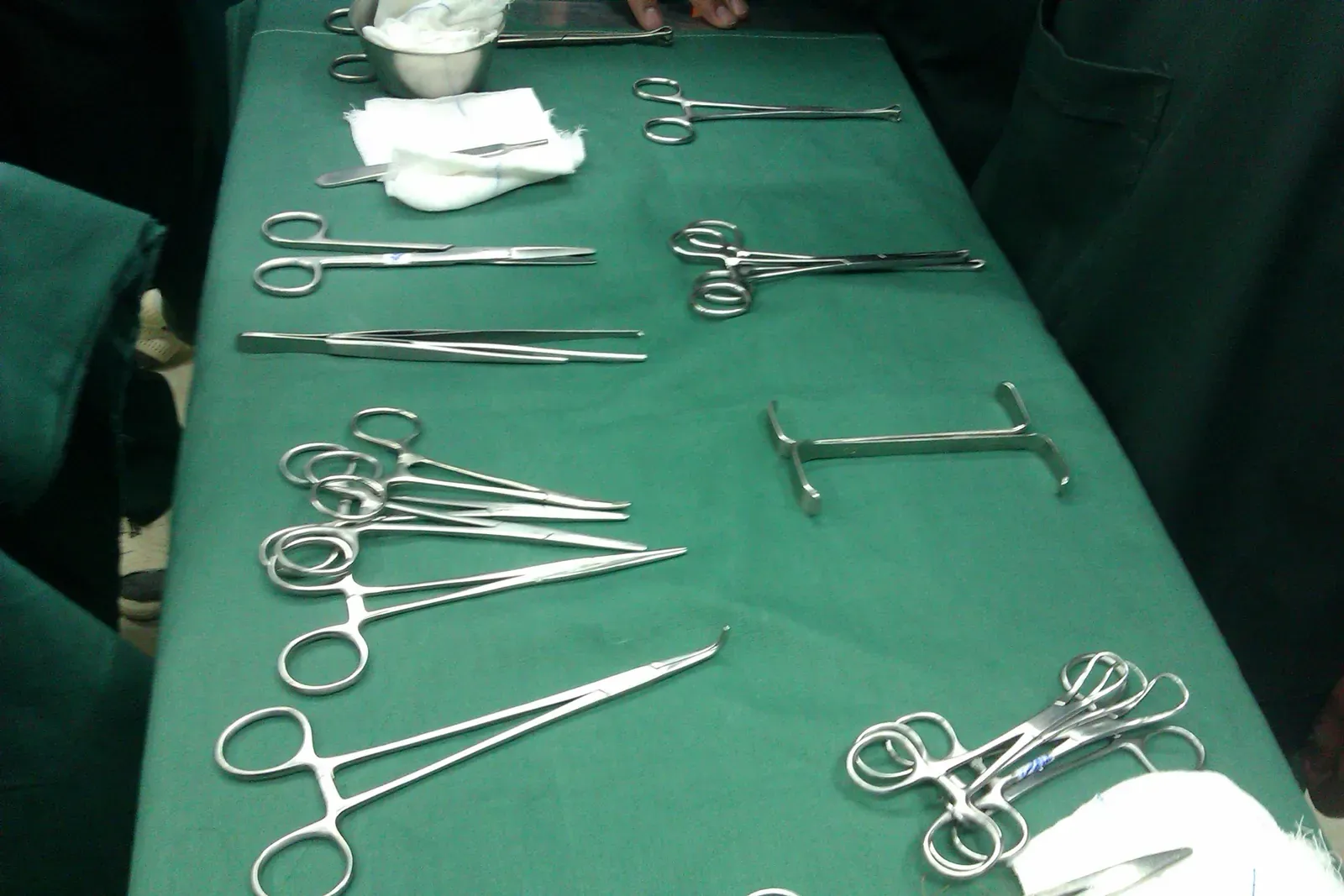 Photo: آرمین, via Wikimedia Commons (CC0).

Sterile processing technician requirements and skills
Employers usually look for:
- a high school diploma or GED;
- certification (CRCST or CSPDT), or willingness to earn it within a set time after hire;
- attention to detail, since a missing instrument or a damaged package can delay or endanger a procedure;
- the ability to follow written instructions exactly, especially each device manufacturer’s instructions for use;
- physical stamina for standing most of the shift and lifting heavy instrument trays;
- teamwork and calm communication with the operating room, which depends on SPD to start cases on time.
Certification can also be a legal requirement. Under New York’s Public Health Law § 2824, central service technicians must hold the CRCST, the CSPDT or an equivalent credential, and new hires without one have 18 months from their hire date to earn it. Students and interns working under direct supervision are exempt. This guide doesn’t cover other states’ rules, so check with employers where you plan to work.
How long does it take to become a sterile processing technician?
It depends mostly on how fast you can log 400 hours. As a rough estimate, someone working full time in a department (about 40 hours a week) reaches 400 hours in about 10 weeks. Add the time for a course if you take one, and a few weeks to study and schedule the exam within HSPA’s 120-day window.
The provisional route can shorten the wait for the credential itself: you pass the exam first, then have 6 months to finish the hours.
How much do sterile processing technicians make?
Pay depends on the region, the type of facility, your experience and certification. The most reliable national figures are the U.S. Bureau of Labor Statistics wage estimates for medical equipment preparers, which break pay down by state and metro area. Job postings in your area are the best guide to what employers near you offer.
Is sterile processing a good career?
For many people it is a practical way into healthcare without a degree. You can start as a trainee, certify in months, and move up: HSPA offers further certifications in instrumentation (CIS), endoscope reprocessing (CER) and leadership (CHL), and experienced techs move into lead, educator and supervisor roles.
The downsides are real too. The work is physical, often fast-paced around the surgery schedule, and many departments run evening, night and weekend shifts. If you like routine, precision and working behind the scenes, it fits well.
Ready to start?
Get your first hours under way, then study by exam section. Our free CRCST practice tests show where you stand in each of the seven areas, and CRCST Prep gives you 901 exam-style questions with explanations, flashcards and full 150-question mock exams on your iPhone or iPad.
Frequently asked questions
Do you need a degree to be a sterile processing technician?
No. Most employers ask for a high school diploma or GED plus certification or the willingness to earn it. A college certificate program is one way to learn, but it isn’t required for the CRCST.
Can you become a sterile processing tech without experience?
Yes. Many people start in trainee or entry-level jobs and earn their 400 hours on the job. With the provisional CRCST you can pass the exam first and complete the hours within 6 months.
How long does it take to become a sterile processing technician?
Usually a few months. At full time, the 400 required hours take about 10 weeks; a course, studying and scheduling the exam add to that.
Is the CRCST exam hard?
It is a 150-question exam covering seven areas, and you need real knowledge of decontamination, packaging and sterilization, which make up 63% of it. Practicing by section and taking timed mock exams is the most reliable preparation. HSPA does not publish a percentage passing score.
What is the difference between the CRCST and the CBSPD?
The CRCST is awarded by HSPA. The CBSPD is a separate certification board that awards the CSPDT. Both are national sterile processing certifications, and New York’s law accepts either.
Is sterile processing the same as a surgical tech?
No. Surgical technologists work in the operating room during procedures. Sterile processing technicians work in the sterile processing department, preparing the instruments and equipment those procedures use.
Written by
CRCST Prep Editorial Team
The team behind CRCST Prep, the CRCST exam prep app. Questions or corrections? Contact us.