
Certification· 8 min read
CRCST Certification: Requirements, Exam, Cost and Renewal (2026)
CRCST is HSPA's sterile processing certification. The 400-hour requirement, full vs provisional, the 150-question exam, the $140 fee and yearly renewal.
By CRCST Prep Editorial Team
Key takeaways
- CRCST stands for Certified Registered Central Service Technician. It is the core sterile processing certification from HSPA, the Healthcare Sterile Processing Association (formerly IAHCSMM).
- You need two things: a passing score on the CRCST exam and 400 hours of hands-on sterile processing experience, either before the exam (full certification) or within 6 months after it (provisional).
- The exam has 150 multiple-choice questions (125 scored), takes 3 hours at a Prometric testing center and costs $140. HSPA reports pass or fail, not a percentage.
- Certification lasts one year at a time. Renewal takes 12 continuing education credits and a $50 fee every year.
CRCST stands for Certified Registered Central Service Technician, the sterile processing certification awarded by HSPA, the Healthcare Sterile Processing Association (formerly IAHCSMM). To earn it you pass a 150-question exam and document 400 hours of hands-on experience in a sterile processing department, either before the exam (full certification) or within 6 months after passing (provisional certification). You then renew it every year with continuing education.
The rules below come from HSPA’s Certification Handbook (revised January 2026) and the CRCST content outline (revised November 2023), as of November 2026. HSPA changes fees and outlines from time to time, so check its CRCST page before you apply.
This guide walks through the whole path in order: who needs the CRCST, the hours, the application, the exam, results, and how to keep the credential.
What is CRCST certification?
The CRCST shows that a technician has the knowledge to decontaminate, inspect, assemble, package, sterilize, store and distribute reusable medical devices safely. HSPA’s handbook describes it as the certification for “technicians who are responsible for surgical instruments or devices in a healthcare facility.”
It is a professional certification, not a state license. HSPA’s CRCST program is accredited by the ANSI National Accreditation Board (ANAB) and the National Commission for Certifying Agencies (NCCA). Although the program is based on US practice and standards, candidates outside the US who meet the requirements can take it.
Who needs the CRCST?
Many hospitals and surgery centers ask for it when they hire, or expect new hires to earn it within a set time. In a few places it is the law. In New York, Public Health Law § 2824 requires central service technicians to hold the CRCST, the CBSPD’s certified sterile processing and distribution technician (CSPDT) credential or an equivalent. New hires without one have 18 months from the date of hire to earn it, and certified technicians must complete 10 hours of continuing education a year to stay qualified.
If you are not sure what applies to you, ask the sterile processing manager where you want to work. Requirements differ by employer and by state.
How to get CRCST certification, step by step
- Get your 400 hands-on hours in a sterile processing department, paid or volunteer, in the areas HSPA lists (table below). A supervisor who watched your work signs off on them.
- Choose full or provisional certification. Full means the hours are done before you test. Provisional means you test first and finish the hours within 6 months.
- Apply to HSPA and pay the $140 exam fee. Every application includes a $25 non-refundable application fee.
- Schedule your exam at a Prometric testing center within 120 days of HSPA approving your application. Missing that window ends your eligibility and you forfeit the fee.
- Take the exam. You get a preliminary pass or fail on screen at the testing center, followed by an email within 48 hours.
- Receive your certificate or finish your hours. If you passed with your hours complete, HSPA mails your certificate within two weeks. If you are provisional, you submit your hours to become fully certified.
The 400 hours, by area
HSPA requires the 400 hours to be split across these areas of experience:
| Area of experience | Hours |
|---|---|
| Decontamination | 120 |
| Preparing and packaging instruments | 120 |
| Sterilization and disinfection | 120 |
| Storage and distribution | 24 |
| Quality assurance processes | 16 |
| Total | 400 |
The hours can be paid or volunteer and can come from more than one facility, with each facility documenting its share. For full certification they must have been earned within the past 5 years. Hours in a dental, optical or veterinary clinic (anything other than a hospital or surgery center) count only if HSPA approves the facility first. HSPA does not place candidates, so finding a department is up to you.
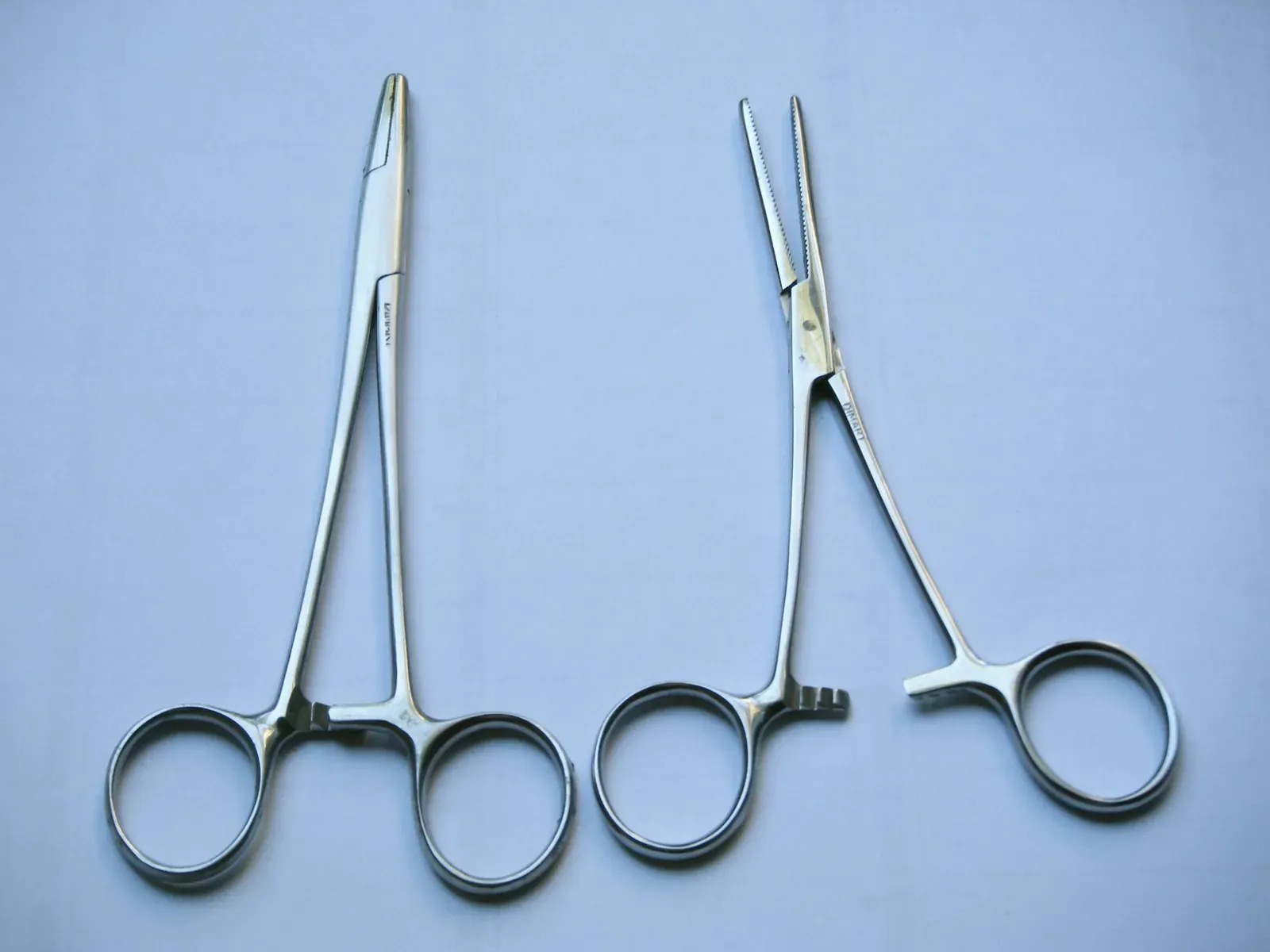 Photo: Ricce, via Wikimedia Commons (public domain).

Full vs provisional CRCST
Both paths lead to the same credential. The difference is when you complete the hours.
| Full certification | Provisional certification | |
|---|---|---|
| When the 400 hours are done | Before you apply | Within 6 months after you pass |
| Who signs off | A supervisor who observed your work | A manager or supervisor above you who witnessed the hours |
| Extension | Not needed | One 2-month extension, requested by your supervisor before the deadline, if you are working or volunteering in an SP department |
| If you miss the deadline | (not applicable) | The provisional certification is forfeited and you must pass a retake exam, with full fees |
HSPA calls full certification its recommended option. Provisional suits people who finished a course and want to test while the material is fresh, as long as they have a realistic way to log 400 hours in 6 months.
The CRCST exam
| Fact | Detail |
|---|---|
| Questions | 150 multiple choice: 125 scored and 25 unscored pretest questions |
| Time | 3 hours (an optional 15-minute tutorial comes first and doesn’t count) |
| Where | Computer-based, at a Prometric testing center |
| Language | English only; no translation services |
| Fee | $140 (including a $25 non-refundable application fee) |
| Scheduling | Within 120 days of application approval |
| Retake | After a 6-week wait, with a new application and the full $140 fee |
The 25 pretest questions are mixed in at random and look like the scored ones, so answer every question as if it counts. You can mark questions for review and change answers before you finish.
What’s on the exam
The CRCST content outline splits the exam into seven sections. The weight is the share of the exam each one carries:
| Section | Share of the exam | Free practice |
|---|---|---|
| Departmental Considerations | 15% | 10 questions |
| Cleaning, Decontamination and Disinfection | 21% | 10 questions |
| Preparation and Packaging | 21% | 10 questions |
| Sterilization Process | 21% | 10 questions |
| Sterile Storage, Transport and Inventory Management | 9% | 10 questions |
| Patient Care Equipment and Distribution | 5% | 10 questions |
| Professional Development and Human Relation Skills | 8% | 10 questions |
Cleaning, packaging and sterilization together make up 63% of the exam, which is where most of your study time should go.
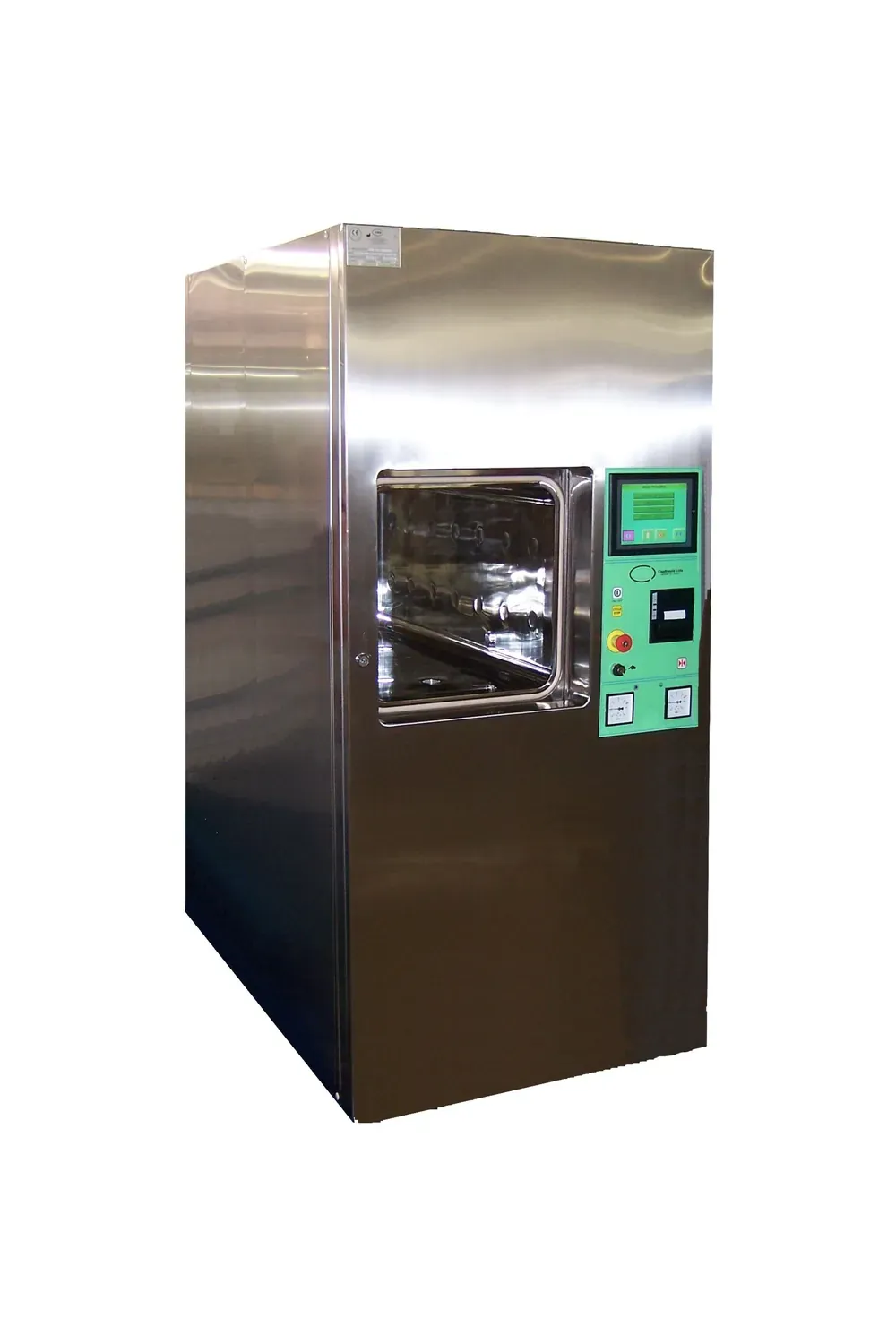 Photo: Fernando A. Rivetti Suelotto, via Wikimedia Commons (public domain).

What score do you need to pass the CRCST?
There is no published percentage. HSPA sets the passing point with a criterion-referenced method (the Angoff procedure, supplemented by the Beuk compromise method), and your pass or fail depends on how many of the 125 scored questions you answer correctly. The handbook says it plainly: “HSPA does not provide percentage scores.”
If you don’t pass, your result report shows how you did in each content area as “At or Above”, “Below” or “Well Below” the standard. Use it to decide what to study before your retake. Any figure you see quoted as “the CRCST passing percentage” is not from HSPA.
Do you need a course to get the CRCST?
No. The handbook states that it is not required to take or pass a preparatory course or to buy study materials; you can apply directly. What you can’t skip is the 400 hours.
A course can still help, especially if you are new to healthcare: it teaches the vocabulary, the workflow and the standards before you start your hours. HSPA’s own reference text is the Sterile Processing Technical Manual (9th edition), and HSPA also lists ANSI/AAMI ST79 and AORN’s Guidelines for Perioperative Practice among its reference materials.
How to keep your CRCST: annual renewal
CRCST certification is valid for one year at a time. To renew, you submit every year:
- 12 continuing education (CE) credits, focused on sterile processing topics and technical in nature, all earned within the year before your renewal date;
- the $50 renewal fee.
Renewals are due by the last day of the anniversary month of your certification. One hour of education equals one CE credit, and HSPA’s online lesson plans add credits to your account automatically when you pass their quizzes. If you work in New York, the state’s own 10-hour yearly requirement applies as well.
CRCST vs CBSPD (CSPDT)
The CBSPD (Certification Board for Sterile Processing and Distribution) is a separate organization that offers its own technician certification, the CSPDT. It is not part of HSPA. Both are national certifications, and New York’s law accepts either. Which one your employer prefers is worth asking before you apply; this guide covers HSPA’s CRCST only.
How to prepare for the CRCST exam
Start with practice questions by section to find your weak areas, then fill the gaps with the technical manual and your hands-on work. Our free CRCST practice tests include a mixed test and one test per section, each with explanations. For daily practice on your phone, CRCST Prep has 901 exam-style questions across all seven sections, flashcards, and timed 150-question mock exams that mirror the real format (iPhone and iPad).
The order that works for most candidates: get your hours under way, study by section, sit a full mock exam, then book the real one inside your 120-day window.
Frequently asked questions
What does CRCST stand for?
CRCST stands for Certified Registered Central Service Technician. It is awarded by the Healthcare Sterile Processing Association (HSPA), formerly known as IAHCSMM.
How many questions are on the CRCST exam?
150 multiple-choice questions, of which 125 are scored and 25 are unscored pretest questions. You have 3 hours to complete it at a Prometric testing center.
How much does the CRCST exam cost?
$140, which includes a $25 non-refundable application fee. Each retake costs the full $140 again. Renewal after you are certified is $50 a year.
What is a provisional CRCST?
A CRCST earned by passing the exam before completing the 400 hands-on hours. You then have 6 months to finish and submit the hours (with one possible 2-month extension). If you miss the deadline, the provisional certification is forfeited.
Can I take the CRCST exam without experience?
Yes, through the provisional path: you can pass the exam first and complete the 400 hours within 6 months. You cannot become fully certified without the hours.
How long is the CRCST certification valid?
One year at a time. You keep it by renewing annually with 12 CE credits and the $50 fee.
What happens if I fail the CRCST exam?
You can submit a retake application right away, but you must wait at least 6 weeks after your last attempt to test again, and you pay the full exam fee. Your result report shows which content areas to work on.
Written by
CRCST Prep Editorial Team
The team behind CRCST Prep, the CRCST exam prep app. Questions or corrections? Contact us.